On May 26 Vaginal Davis presents the fourth and final part of the MGM musical series "Broadway Melody": In BROADWAY MELODY OF 1940 (Norman Taurog, USA 1940), Fred Astaire and George Murphy play a down on their luck dance duo, whose friendship is put to the test when a chance at big-scale Broadway fame at the side of starlet Claire Bennett (played by Eleanor Powell) presents itself. Fred Astaire and Eleanor Powell, the biggest dance stars of their time, appeared here for the first and only time together before the camera, with Cole Porter taking care of the music.
Living Archive is approaching the (preliminary) finish line: Throughout the month of June, the participants of the project will present the results of their research at the Arsenal and at KW Institute for Contemporary Art. Save the whole month! Also, the Arsenal turns 50! We will kick off the celebration with a special evening on June 4. Due to the June preparations, there will be no Living Archive events this month, except for Rising Stars, Falling Stars on May 26. Also, we inaugurate a viewing station in the "Studiolo" of the KW with a selection of films, which have been (re-)discovered through the Living Archive project.
Stefanie Schlüter invites schoolchildren to Arsenal with her "Living Archive for children, with children" project. What can a film archive do, what can films do for the aesthetic and cultural edcuation of young people growing up in the digital age? The center of her project, which is primarily directed at elementary pupils, is the Arsenal's comprehensive collection of experimental films. These can confront the viewer with an unusual view of things, they are often playful in form and deal with questions of perception at the intersection between film and other arts.
Our last public screening for some time is taking place on April 10. Since the Living Archive project began in June 2011, participants have selected films once a month to watch and discuss with the public. There have been rediscoveries and unexpected treasures, which have aroused a great deal of interest. That’s why the series will resume from July onwards.
We are looking forward to a special screening in April: Together with the audience, Stefanie Schulte Strathaus, artistic director of the project Living Archive, will spontaneously select films from the Arsenal archive and project them.
On March 24, Vaginal Davis presents "Rising Stars, Falling Stars – We Must Have Music!". This month, Ms. Davis is presenting a rarity from the archive, a film by one of the most important directors of early Egyptian cinema: Muhammad Karim. The film ZEINAB (Egypt 1950, 35mm, OV/Ges, 111 min) will be screened. ZEINAB is a sound remake of his eponymous 1930 silent movie. Both films are based on Muhammad Husein Haikal's novel written in 1914, about a peasant girl trapped between social and family convention and her own hopes. The criticism of traditional family structures and arranged marriages is developed in a romantic and nostalgic aesthetic style. ZEINAB's Soundtrack is a conglomerate of classical music and western orchestral music and it plays a similar role as in Indian Bollywood productions. Followed by drinks and music as always.
At the request of Martin Ebner the films ROSE HOBART (Joseph Cornell, USA 1936, 16mm, without dialogue, 19 min) and SIGNAL – GERMANY ON THE AIR (Ernie Gehr, USA 1985, 16mm, without dialogue, 34 min) will be shown and discussed on March 12. Cornell's first and most impressive film ROSE HOBART is essentially a new version of East of Borneo, a jungle drama by Universal Pictures from 1931 with Rose Hobart and Charles Bickford. ROSE HOBART transforms the banal plot of East of Borneo intentionally into a maze. "Joseph Cornell appropriated a print of the Hollywood film East of Borneo that he had found on a flea market. He re-cut it, shortened it and added images, giving it a new soundtrack so as to create a completely new and self-contained piece. Moreover, Cornell also tinted the film blue, which was originally black and white, by screening it through a tinted glass at the first screening. He played sentimental dance music on a record player. For the print that he made decades later with Jonas Mekas for the Anthology Film Archives in New York he decided upon a reddish-purple color and this provisional or perhaps now final version is also in the Arsenal archive. In this version the soundtrack is an audio cassette or mp3/CD with mambo music from the 1960s that is played parallel to the film when it is screened (but not in sync)." (Martin Ebner)
Ernie Gehr created SIGNAL - GERMANY ON THE AIR during his DAAD artist grant residency in West-Berlin in 1985, Ernie Gehr created SIGNAL - GERMANY ON THE AIR. The title SIGNAL - GERMANY ON THE AIR refers to the audio track of the film, which was mainly composed of radio recordings by Gehr.
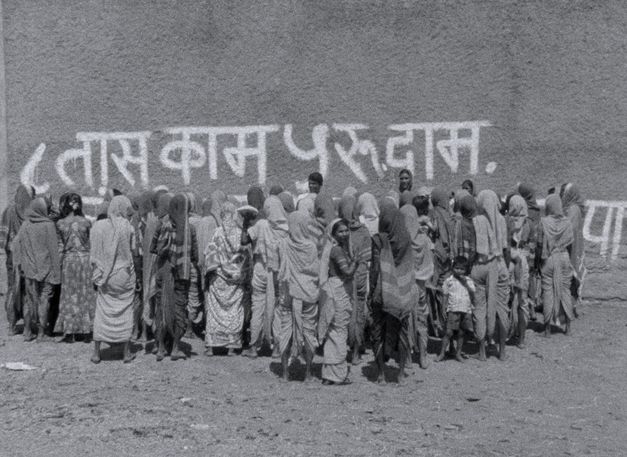
Once again, several events in this year’s Forum and Forum Expanded program are linked to the Living Archive project. On the first day of the festival two events will be taking place: a panel discussion "To Begin with the Archive" with project participants and the Forum Expanded curatorial team and the presentation of a restored version of a film from the 1988 Forum program, KYA HUA IS SHAHAR KO? (WHAT HAPPENDED TO THIS CITY?, Deepa Dhanraj, India 1986) by project participant Nicole Wolf. Two further panel discussions with Living Archive participants will be taking place on February 10 and 11.
Curatorial Mother Vaginal Davis rings in the New Year with Jim Jarmusch's very first film PERMANENT VACATION (USA 1980) on January 27. To a rumbling soundtrack – a mélange of Japanese Gamelan music and John Luries' jazz improvisations – the youthful protagonist Allie drifts through Manhattan's Lower East Side. On his sensual search through rundown, abandoned apartment houses and industrial buildings, the Charlie Parker fans encounters a cross section of Downtown hipsters: saxophone players, crooks, freaks, poets. A melancholy "Odyssey of Cool". Followed, as always, by drinks, music and gossip with Vaginal Davis!
On January 8 the next public screening takes place. At the request of Angela Melitopoulos a selection of films from the Newsreel Collective from the Arsenal archive will be shown and discussed. Established in December 1967 as Newsreel, an activist filmmaker collective, this NY group grew to become a network with chapters across the US. Its different chapters produced and distributed short 16mm films covering the anti-war and women's movements, civil and human rights movements. In the mid-70s the New York Newsreel became Third World Newsreel (TWN).
The countdown is on! In June 2013 the project "Living Archive – Archive Work as a Contemporary Artistic and Curatorial Practice" is ending with a grand closing event, with which we are also celebrating the fiftieth anniversary of the Arsenal – Institute for Film and Video Art (formerly Friends of the German Film Archive). Over the entire month, the participants of Living Archive will present the results of their two years of research and exchange in the Arsenal’s archive in the form of exhibitions, book presentations, DVD projects, film series and performances. Until then, there is still time to view hidden, unknown and forgotten films together within the framework of our public screening series.
This project takes three films by American filmmaker and actress Sheila McLaughlin as representative of a trend in experimental film that took place in the 70s and 80s, moving it away from a radically material-based, self reflexive aesthetic towards the narrative forms of independent film, within which new forms of cinematic representation and documentation could be developed. Over three silent sequences, the short film INSIDE OUT (USA 1976/78) shows moments of sustained, internal tension just before an emotional outburst on the part of the protagonists. The internal bursts out of these portraits like the filling of a broken Piñata doll. The film COMMITTED (USA 1980–84), which Sheila McLaughlin realized together with Lynne Tillman, is not a biography of actress Frances Farmer but rather a fictional analysis of the same. It deals with the disturbed relationship between Farmer and her mother, the sociopolitical climate in the USA of the 30s and 40s, the role of psychiatry as an increasingly powerful determinant in this period and the destructive love story between a woman (actress) and a man (director). COMMITTED is conducted as a Film noir and a period piece – the latter of which is unusual for an independent film. SHE MUST BE SEEING THINGS (USA / West Germany 1987) weaves together a director’s efforts at adapting a novel by Thomas de Quincey for the screen and her conflict-filled relationship with her lover, which feeds off jealously and is hung up on day dreams and revenge fantasies. The production and aesthetic of these films deliver some interesting insights into the transatlantic cooperation being undertaken within independent filmmaking at the time, with all three being shown as part of the Living Archive project of Heinz Emigholz, who is also preparing a DVD release of the films. Sheila McLaughlin will be in attendance at the screening.
At the request of Constanze Ruhm the film ANNA (Italy 1975, 16mm, 213', OV/GeS) by Alberto Grifi and Massimo Sarchielli will be shown and discussed on December 18. ANNA is an documentary about a 16-year-old homeless junkie, eight months pregnant, whom the filmmakers discovered in Rome’s Piazza Navona. It documents the interactions between the beautiful, clearly damaged, often dazed teenager and the directors, who take her in partly out of compassion and partly because she’s a fascinating subject for a film. ANNA cuts between long domestic scenes (including an interminable delousing in the shower) and equally protracted café discussions back in the square, where the unruly cross talk touches on the movie’s key themes: between filmmakers, the state and the society. Far from straightforward vérité, this self-implicating chronicle includes reenactments of the first meeting, explicit attempts to direct its subject, and frequent intrusions from behind the camera (not least the emergence of the film’s electrician as a love interest). The film was originally recorded with a video apparatus in a length of 11 hours and a 4 hours abridged version was transferred to 16mm film in June 1975 by using the "Vidigrafo" (constructed by Grifi himself). That same year, ANNA was shown at the International Forum of New Cinema.
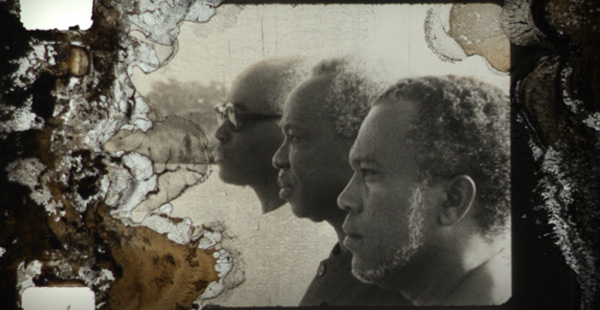
"Specters of Freedom: Cinema and Decolonialization" establishes relationships between the Arsenal film archive and two archives in Mozambique and Guinea-Bissau which relate an important chapter in the story of anti-colonial African cinema. As part of his "Living Archive" project, curator Tobias Hering has invited Portuguese artists Catarina Simão and Filipa César to present their respective, not explicitly related research on each of these archives at the Arsenal cinema. Over a total of five evenings, films of different origins, visual fragments and sound recordings create a resonance chamber which serves to bring up both the role of cinema in the decolonialisation processes of the 70s and the politics of archives for discussion. The timeframe of the film selection is the 70s. The program also includes a video installation by Catarina Simão in the Black Box in the Arsenal foyer (5.11.-12.11. and 26.11.-28.11., 4pm–10pm, projection restarts on the hour). On 27 und 28.11., filmmaker Sana na N'Hada from Guinea-Bissau will also be in attendance.