Are special effects — or their digital counterpart, visual effects — a marginal field in cinematographic art, things pulled from a bag of tricks of tinkerers, firework-makers and computer freaks? Or do they mark the culmination of artistic-creative imagination? Are they a generator of illusions continuously striving for perfection, the most artificial construction in a world that is already artificial in itself: cinema? A view back to the beginnings of cinema makes it clear that the history of film is also the history of the technological manipulation of images. Almost ninety years after Méliès' first "magical" films and after numerous innovations in the field of special effects, this cinematic branch has also experienced its digital revolution. The possibilities offered by so-called computer generated images (abbreviated CGIs) appear boundless regarding the translation of imagination and fantasy into moving images. Yet computers and their "analogue" predecessors not only generate past or future worlds and their inhabitants, but also complex visualizations of emotional, perceptive and mental worlds. Our selection offers initial insights into the varied world of special effects.
Andrei Tarkovsky Retrospective
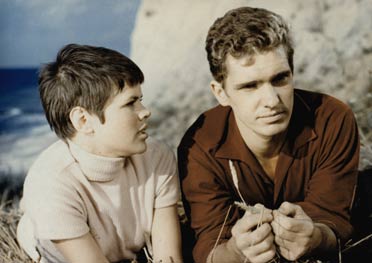
Tarkovsky in the summer – this is a tradition that has grown dear to us and our audience over the past 20 years. In July and August we will screen the seven full-length and one short film of the Russian director Andrei Tarkovsky (1932-86), whose monumental oeuvre gives rise to lasting fascination.
LaBruce
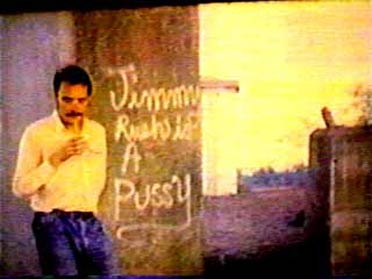
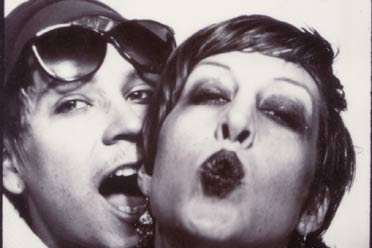
Why Bruce LaBruce? – zombies, skins, punks, Marxism, hustlers, porn stars and female revolutionaries somewhere between art and pornography, film and politics, categories expanding beyond their usual limits. A surplus, a superlative, an underground, intestines. Something that is inside and out at the same time. Something that permeates everything and yet escapes every grasp: a politics of continuously wriggling out of the embrace.
On the Road – The Films of Wim Wenders
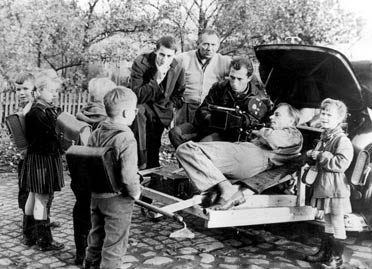
Wim Wenders has been ranking among the most significant auteurs of contemporary cinema for four decades. Alongside Rainer Werner Fassbinder and Werner Herzog, he was the most prominent proponent of New German Cinema and the first director of his generation to succeed in making a leap to the United States and in creating a synthesis between mass and auteur cinema. Until today, his cinematographic oeuvre comprises more than 50 works, including 30 full-length feature films. An oeuvre in which — despite the diversity of forms and genres — recurring aspects can be discerned: the reflection on the production of images and the decline of cinema culture, the outstanding role of music, the preference for the cinema of John Ford and Yasujiro Ozu, his interest in the precise observation of movements — trips, changes of location, encounters — and, often combined with this, an ambivalent relation to "America." Many of Wenders' films are road movies narrating the escape from everyday life, new experiences and adventures, as well as restlessness, homelessness, movements of flight, and a vague quest, in which America plays a decisive role as the destination of flight — especially in Wenders' early movies.
Mexican Melodramas
It was melodramas from which the innovators of 1960s and 70s Latin American cinema got tear-filled eyes in their youth and which they later on rejected all the more vehemently as "products of alienation." Telenovelas have long since replaced melodramas and become today's audiovisual mass experiences. They often fall back on the same stereotypes and myths that were spawned by the classical cinema of dreams and tears in the middle of the last century: love with all convul-sions of passion, motherhood and male obsession, honor and faithfulness, guilt and atonement. The storylines are often outrageous and priggish, but at times also reveal remarkable socio-critical diagnoses. At any rate, what can be admired when viewing this cross-section of melodra-matic subgenres is the exquisite photography of cameraman Gabriel Figueroa as well as the highly expressive acting of the big stars of the period: María Félix, Libertad Lamarque, Dolores del Río, and Pedro Armendariz.
In the Jungle
Accompanying the children's exhibition "In the Jungle", the Deutsche Kinemathek – Museum für Film und Fernsehen will present a film series dedicated to the theme. On each last Sunday of the month, children who have acquired an ID as a jungle explorer have free admission to the film series upon presenting the document. The series comprises a total of eight films and ends in January 2011. As is the case with the exhibition, the film series is not only about jungle fantasies but also about the destruction of this important habitat. The series kicks of with the first film adaptation of Rudyard Kipling's novel The Jungle Book. Zoltan Korda shot the story of Mowgli, who grew up with a group of bears, as a live action film and had his brother and producer install a large "jungle" with exotic plants and animals. The leading role in Korda's JUNGLE BOOK (GB 1942. June 27) is played by the Indian actor Sabu, who at the time the film was produced was already well-known for his role in The Thief of Bagdad.
Picturing Violence
In 2004, numerous pictures emerged documenting U.S. guards torturing Iraqi prisoners in Abu Ghraib. "Picturing Violence" uses the torture scandal as a starting point to discuss how violence is depicted in contemporary media such as film, television and the Internet, and what implications and effects this has. The event starts with the documentary STANDARD OPERATING PROCEDURE (USA 2008) by Errol Morris. Following the screening, the art historian Dora Apel, the cultural scholar Colin Dayan and the director Romuald Karmakar will discuss these themes together with the audience (in English). In addition, the cameraman Robert Chappell will talk about his work on the set of STANDARD OPERATING PROCEDURE. Moderation: Michael Wildt (HU Berlin). (Silvan Niedermeier) (June 25)
As a guest: Klaus Wildenhahn
Klaus Wildenhahn, one of the Federal Republic's most important documentary filmmakers, will celebrate his 80th birthday on June 19. In his presence, we will show 498, THIRD AVENUE (FRG 1967, June 23), a film about the choreographer Merce Cunningham and his dance ensemble. Wildenhahn shows dance as work: strain and exhaustion, but also fun and fan-tasy. A choreography evolves. In a diary-like fashion, the film conveys an impression of the troupe's obsession and strict discipline. The 14-film DVD box "Klaus Wildenhahn – Dokumentarist im Fernsehen. 1965–1991" will also be presented. It has just come out at absolut MEDIEN and is edited by Hans-Michael Bock (CineGraph Hamburg), Christa Donner and Peter Paul Kubitz (Deutsche Kinemathek – Museum für Film und Fernsehen). An event of the Deutsche Kinemathek – Museum für Film und Fernsehen, absolut MEDIEN and CineGraph Hamburg.
kinoPOLSKA
The people and landscapes of Upper Silesia belong to the biographic and artistic points of reference of the Polish director Kazimierz Kutz - around which the two internationally acclaimed films of kinoPOLSKA also revolve.
Special: BERLIN. DIE SINFONIE DER GROSSSTADT (BERLIN:SYMPHONY OF A GREAT CITY)
As a special we will again screen Walter Ruttmann's city symphony BERLIN. DIE SINFONIE DER GROSSSTADT (Berlin: Symphony of a Great City, Germany 1927, June 20, on the piano: Eunice Martins). The tableau of a day in the metropolis of Berlin offers fascinating insights into the living and working conditions of flourishing 1920s Berlin. The film is not only an impressive historical document but also a filmic experiment: a composition of movement and light. The film shows workers, clerks and schoolchildren, businessmen, mannequins, and beggars, automobiles, street-cars and fast trains, love, weddings, and death, a slaughterhouse, Wannsee, and the zoo, conveying the rhythm of a big city with all its contrasts.
Funded by:
Arsenal on Location is funded by the Capital Cultural Fund
The international programs of Arsenal on Location are a cooperation with the Goethe-Institut