Two films by Andrzej Wajda that focus on important eras in Polish history – the Stalinist period and the strikes at the shipyards in Gdansk. CZŁOWIEK Z MARMURU (Man of Marble, Andrzej Wajda, Poland 1977, Nov. 4) The film student Agnieszka is planning a documentary on a "hero of labor" of the 1950s. In the basement of a museum she comes upon the discarded statue of the worker Mateusz Birkut and starts researching the "man of marble" in archives and old newsreels.
Super 8 Scores – Films by Helga Fanderl
Within the framework of the UdK seminar "Politics and Poetics of Filming", Helga Fanderl will personally present her super 8 films on Nov. 9. Her short films are created in the camera through the gesture of filming itself and are not processed afterwards. They are concentrated, fragile moments of the present in interaction with the filmed object. Each subject is given its own filmic form and rhythm. For each projection, the filmmaker combines a selection of films that harmonize and give insights into her work.
German premiere: THE INVISIBLE FRAME
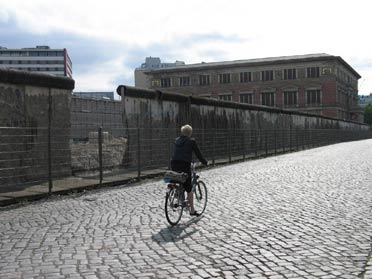
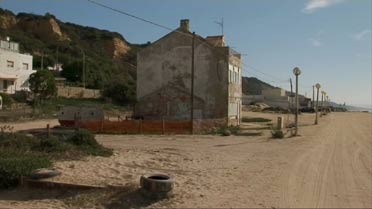
21 years after Cynthia Beatt's filmic journey along the Berlin Wall with Tilda Swinton, CYCLING THE FRAME (1988), the two this summer again traveled the line that the Wall cut through Berlin. In THE INVISIBLE FRAME (2009), they follow the same path through a variety of border landscapes, this time, however, on both the Western and Eastern side of Berlin. The further Tilda Swinton gets on her bicycle tour, the clearer it becomes what the Berlin Wall once separated and to what extent the city has changed since the Wall came down. We are delighted to show THE INVISIBLE FRAME on Nov. 8 in the presence of Cynthia Beatt, Tilda Swinton and Frieder Schlaich as a German premiere at Arsenal. From Nov. 15 on, the film we be shown each Sunday together with CYCLING THE FRAME at 5 p.m. at Arsenal. An event in cooperation with Filmgalerie 451.
FilmDokument: Film Documents on the November Pogrom 1938
The November pogrom marks a central turning-point in the anti-Semitic policy of National Socialist Germany. On the night of November 9 to 10, 1938, thousands of Jewish synagogues, businesses and homes were destroyed and at least 91 people murdered in an action initiated by the SA. Despite the ban issued on filming and photographing, several film documents from private sources do exist. Official recordings show the "leveling" of the ruins. All of these documents can also be found in subsequent documentations of the events and have visually shaped the images and conceptions of the pogrom.
Strange Culture
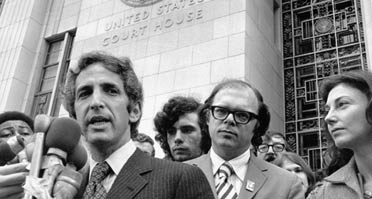
Until November 15, the exhibition "Seized" will be on view at Art Laboratory Berlin. Among others, the show focuses on the artist and scientist Steve Kurtz, who in 2004 was suspected of and charged with bio-terrorism by the FBI. Director Lynn Hershman Leeson deals with this case that caused an international stir in her most recent film STRANGE CULTURE (USA 2007, Nov. 2). Based on documentary recordings, interviews, short acting scenes and comics, she examines the accusations made against Kurtz. This film is part of an international campaign in which famous artists such as Tilda Swinton show their solidarity with Kurtz. After the screening, there will be a discussion with Eberhard Schultz (lawyer), Mark C. Donfried (Institute for Cultural Diplomacy), Christian de Lutz, and Regine Rapp (both Art Laboratory Berlin).
UdK Film Series Poetic Cinema
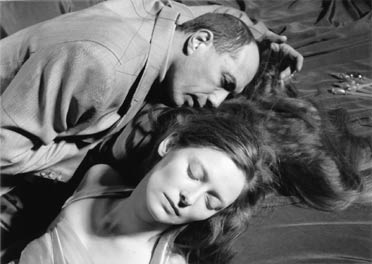
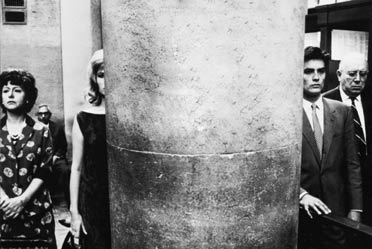
LE JOUR SE LÈVE (Daybreak, Marcel Carné, F 1939; with Jean Gabin, dialogs by Jaques Prévert and production design by Alexandre Trauner, Nov. 3, 10 and 17). The film starts with a crescendo, followed by white writing on a black ground that immediately says it all: "A man has murdered. Locked up in his room, he remembers the circumstances that made him a murderer." An evening, a night, a morning, and three long flashbacks: time is inflected, prolonged and compressed: the last hours of the factory worker Francois until he shoots himself before he is shot by someone else. The protagonists are orphans, and the film is about the freedom into which they were placed, like into a straightjacket. A film against humanism and for poetic form. Three times a month, three different topics: modern acting, modern dialogs, modern buildings. (Heinz Emigholz)
Remembering Ulrich Schamoni
On November 9, 2009, Ulrich Schamoni would have celebrated his 70th birthday. The Deutsche Kinemathek will commemorate the director with a small film series and, together with his family, found the Sammlung Ulrich Schamoni to secure and preserve his films and related material for film research. "Geist und ein wenig Glück [Wit and a Bit of Luck]" – the title of his documentary on New German Cinema shot in 1965 – assisted him in his attempts to combine sophisticated topics with popular cinema in the 1960s and 70s. After being trained to become assistant director and actor, he made his public appearance in 1962 with his novel Dein Sohn lässt grüßen, which was immediately put on the index by the Bundesprüfstelle für jugendgefährdende Schriften. The feature film ES (Nov. 11) from 1966 deals with the marriage crisis of a young couple. The everyday reality and the attitude toward life of the young generation formulates a filmic counter-position to the then still prevailing problem-free entertainment cinema of the established industry.
Magical History Tour: Bodies in Cinema
On Screen Bodies and Spectator Perception
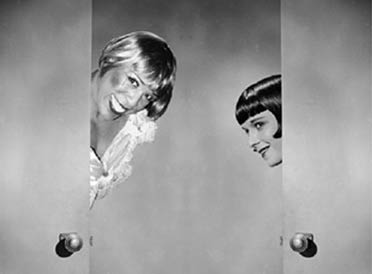
Since the beginnings of cinematography, the fascination with moving images is in part due to the bodily depiction of acting persons on the screen. It is not by chance that the first movie recordings show good-humored workers, men doing gymnastics or fresh kids. Yet in the audience's enthusiasm when viewing these images, the direct communication between the film and one's own (spectator) body was already inscribed. Nothing has changed until this day regarding the potential of film to affect the spectator's body. Moreover, cinematic depiction and staging, the illusion and (de)construction of the body are still elementary aesthetic methods of cinema. The films we have selected this month – from throughout the history of film – are examples of the different forms of depicting the body and corporeality, body constructions and stagings. The supporting films are selected either in a complementary or contrapuntal way. The forms of embodied (spectator) experience resulting from the shown films and the ways in which they are positioned in the overall complex of filmic experience, are what viewers can retrace anew with their own bodies (almost) every evening.
ONE WORLD BERLIN
The ONE WORLD BERLIN Filmfestival für Menschenrechte und Medien will take place for the sixth time in 2009. From Nov. 26 through Dec. 2, 13 programs – documentaries, feature films and animations – will be shown at Kino Arsenal.
AFRIKAMERA 2009: African Soundscapes – African Movies
In its second edition, "AFRIKAMERA 2009: African Soundscapes – African Movies" from November 11 – 14 at Arsenal presents a selection of current films from Africa with a new thematic focus. The festival organized by the non-profit culture association toucouleur e.V. seeks to counteract the lacking presence of current African filmmaking in Berlin. AFRIKAMERA grasps itself as a new, permanent platform for dialog between African filmmakers and the Berlin audience.
Funded by:
Arsenal on Location is funded by the Capital Cultural Fund
The international programs of Arsenal on Location are a cooperation with the Goethe-Institut