Jump directly to the page contents

‘You can probably not even bring yourself to say something like that. Even though you maybe should say it, because it’s also part of our lives.'

These lines close the rough cut of Chetna Vora’s Frauen in Berlin. The film was intended as her Abschlussfilm(graduation film) at East Germany’s film school, the Hochschule für Film und Fernsehen (HFF) in 1981. In retrospect, these words look like a prophecy. After reviewing the 139-minute rough cut, the HFF demanded that graduating student Vora shorten her film to approximately half an hour.

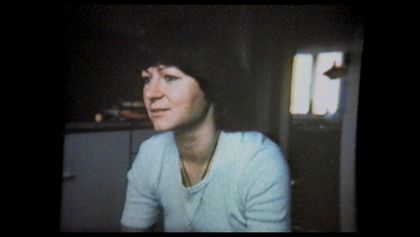
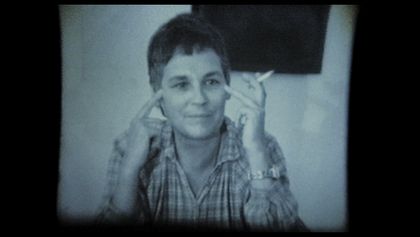
A record of the school’s internal review remains lost.[1] Yet the fact alone that there was a 139-minute rough cut compared to the required 30 minutes shows that Vora ‘could not bring herself to it.’ But to what exactly? How the HFF could have accepted the film can be seen in the radically shortened version entitled ANSICHTEN, ANSPRÜCHE – FRAUEN ÜBER SICH SELBST (OPINIONS, EXPECTATIONS – WOMEN ABOUT THEMSELVES), which the HFF ultimately made out of the footage in 1983 and in which merely four of the fifteen women appear.[2] In Vora’s rough cut, however, there are five women protagonists (woman with bright t-shirt in a kitchen, strong woman with four children, dark-haired woman at the window, a Hungarian woman who lives in Berlin, short-haired widow), who provide detailed accounts of marriage, divorce, family, and professions, and ten secondary character who, in part, only make short statements.

The short version frames the interviews with title cards (narration was common, as seen in many other student productions), while Vora had allowed several women to speak more than once throughout the whole film. The short version identifies the women by name, in Vora’s version they remain anonymous. Vora was unable to complete her film, but her Hauptprüfungsfilm (main exam film) Oyoyo of 1980[3] suggests that she would also not have identified her interview subjects by name in a final version and she would not have isolated and patronised their statements with narration.

Vora’s rough cut is made up of two parts. The first can be summed up as ‘women’s experiences in partnerships, family, and professional life.’ It is framed by long shots of a Paternoster. This part, with three women who take turns talking and surrounded by shorter statements from other women, still best corresponds to the HFF’s view of what an interview-based documentary should be. The short version still suggest certain similarities to this part, in that it maintains the three protagonists in the same order, even if very shortened. Without a doubt, the short version therefore robs the women of their emancipatory achievements.[4]

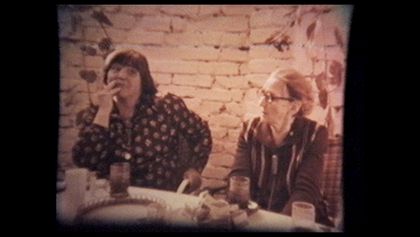
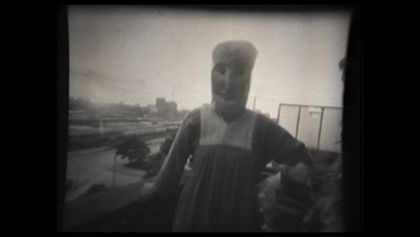
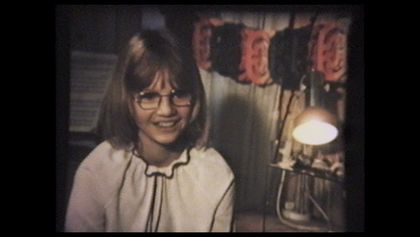
With 90 minutes, the far longer second part could perhaps by summed up as ‘wishes and disillusion.’ More freely and with faster editing, Vora cuts together eleven women and concludes with another long report on (their) experiences. While the women in the first part belong to the same generation and are in their thirties, the second part includes interviews with an approximately twelve year old girl, two women who lived through the Weimar Republic and the Nazi era, and a woman who was in her twenties as the Wall was built. Here, the women’s stories are less frequently told in full, but are therefore more strongly interlocked. There is also striking formal play: One interview is exclusively visual, in one a woman is partly seen wearing a mask, and images from one interview are used as cutaways with the melody of a music box.

The beginning of the second part is surprising, featuring a kind of microstudy of the question of the difference between women’s relationships to women and men and women’s relationships. First, a twelve-year-old girl gives her account, followed by two women in their twenties – they say nothing. Maybe a couple? Here, the time-consuming procedure of hair washing in a kitchen is shown. A bikini-clad woman heats water on the stove and, with the help of several bowls, she washes her hair. And finally, one who is in her 30s, about tense physical contact between (heterosexual?) women.

Asked about happiness and desires, the women describe the boundaries imposed on them by the realities of their private, professional, and social lives. Like the Paternoster part one, Vora and her cinematographer Thomas Plenert also find a strong image for part two: a massive tree trapped between two buildings. One suspects that these images, which imply containment, but also the passage of time and breaking away, may have made the functionaries at the HFF just as uncomfortable as the women’s reflections.

The eighty year old female communist may have been a concrete target.[5] Her impersonal, official, and opportunistic language sets her apart from the other women and makes her their polar opposite. She comes across like an exclamation point to the others’ very free and personal contributions. Whether this was perceived as a provocation – shortly after, the twelve-year-old says, ‘I don’t know what Communism should change so that things becomes different’ – must remain speculation.

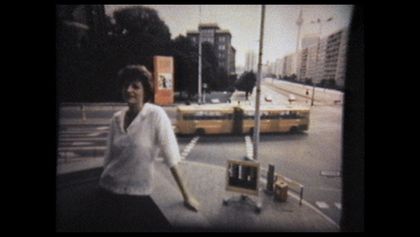
Unlike the title FRAUEN IN BERLIN implies, the women are not filmed at notable East Berlin locations, but instead in what appear to be their apartments. The home as the classic site of the woman in bourgeois society hardly corresponds to East Germany’s desire to change social structures. There are only occasional exterior shots of partly identifiable streets. Here too, the women are again placed visually in their home, in interviews on balconies or a zoom from a cityscape filmed through a window to a woman sitting on a windowsill. The women’s apartments offered the possibility of catching a glimpse of their daily life – like when one of their sons comes home in the middle of the interview and a sandwich is made before filming and talking continue.

Chetna Vora is sometimes audible with her questions, especially at cuts, and small dialogues develop with the interview subjects. In the last interview, the roles even briefly reverse and Vora is asked about the subject of wearing make-up in her own culture and for her personally. Maybe we have the rough cut to thank for these interactions between the director and her interview subjects. Would Vora have cleaned up these parts if she had been able to finish her work? In a few spots, it appears impossible when the transition between follow-up questions and answers is so tight that trimming the cuts would have cut off statements.

Silhouettes

Even more than the its incompleteness, the rough cut’s survival on a VHS tape with poor visual quality influences the film’s impact. It was shot on 16mm reversal film.[6] Vora edited[7] the camera original with Petra Heymann.[8] This made her rough cut especially vulnerable when the school demanded Vora make drastic cuts. Since camera original and work print are one here – the same material – any intervention in the rough cut meant the destruction of Vora’s intention. The only way to save her film was by making a copy.[9] This was only possible unofficially with the help of private contacts. Vora took the 16mm reels of the rough cut and the separate sound reels out of the school without permission. The copy was made by projecting the footage with a 16mm projector, presumably onto a sheet, and re-filming it with a VHS camera.   

As adventurous as this technical set-up seems from today’s perspective, in the East Germany of 1981, it was determined by the technical and political framework of both the latest video technology and controlled film recording and reproduction technology. As far as the participants’ memories can reconstruct it,[10] Thomas Plenert or others with personal connections to the Volksbühne may have had contact to Klaus Freymuth, a freelance filmmaker with his own studio.[11] In his 1989 handbook ‘Filmpraxis’, Freymuth mentions filmmakers using this kind of video transfer of film footage: ‘Most simply, one uses a colour camera which transfers the projected image from an even, white wall in a pitch black room. […] The quality that can be achieved with this method is quite modest.’[12]

A PAL VHS[13] can only reproduce a fraction of the resolution of normal 16mm film.[14] This results in an obvious degradation in visual quality for the rough cut. Today, this VHS is the only known material evidence of Vora’s rough cut, [15] because the film school discovered the 16mm reels were missing and had them confiscated. Ever since, the 16mm film is missing both in the form of the rough cut as well as in terms of unused footage. The preservation of the camera original as the mere 23-minute montage ANSICHTEN, ANSPRÜCHE – FRAUEN ÜBER SICH SELBST seems quite cynical, but still the comparison with the VHS brings to light what was permanently lost with the rough cut.[16] (Ill. 1 and 2).
A PAL VHS[1] can only reproduce a fraction of the resolution of normal 16mm film.[2] This results in an obvious degradation in visual quality for the rough cut. Today, this VHS is the only known material evidence of Vora’s rough cut, [3] because the film school discovered the 16mm reels were missing and had them confiscated. Ever since, the 16mm film is missing both in the form of the rough cut as well as in terms of unused footage. The preservation of the camera original as the mere 23-minute montage ANSICHTEN, ANSPRÜCHE – FRAUEN ÜBER SICH SELBST seems quite cynical, but still the comparison with the VHS brings to light what was permanently lost with the rough cut.[4] (Ill. 1 and 2).
 

Since it was copied by videotaping a film projection, the tape contains several artefacts. There is very prominent bending towards the middle of the picture on both sides throughout the entire film. Comparing it to the reversal original showed that the entire image is distorted and the degree of distortion varies both within the image and over the length of the film. It was therefore impossible to correct the distortion. (Ill. 2) The cause could not be determined.

Shifts in focus and brightness, which can traced back to the video camera’s autofocus, are especially noticeable at the beginning of many shots. The digital grading balanced out the shifts in brightness as much as possible. The over and underexposure on the VHS tape is, however, partly so extreme that attempts to correct them produced digital artefacts. 

The goal of the film university’s project was to be able to show the rough cut preserved on the VHS in cinemas. To meet today’s cinema standards, a DCP with a minimum resolution of 2K is required, more than twice as high as the resolution of the VHS. Therefore, the PAL footage needed to be upscaled to 2K. This can in principle be combined with different approaches for optimising image quality. (Ill. 3-5).[1] However, the question is how much one should manipulate the image. The decision was ultimately made to upscale without further video processing, since image optimisation merely corresponds to subjective taste while lost visual information can never be recuperated. The image optimisation aligns with contemporary trends in digital images – the application of AI even leads to the reconstruction of parts of the image – rather than the visual impression of the 16mm reversal original or the VHS tape.

On the VHS, the title shown is not FRAUEN IN BERLIN, but instead SCHATTENBILDER. Nobody involved remembers this title. In the few available documents from the HFF, the title FRAUEN IN BERLIN is also used. It almost seems like Vora chose SCHATTENBILDER in reaction to the film’s suppression. It looks like it was made spontaneously – it is clearly written on a sheet of paper with a typewriter. Did she want to comment on the fate of her film and the loss of information in the low-resolution video image, which took away the women’s facial gestures and, in part, their recognisability? Does it stand for the work which remains incomplete and which Vora was forced to do by the HFF’s suppressing of the film? The school could not take away the voice she had given to the women. Although it is distorted, the sound quality is comparatively good, since the projector’s sound output was connected to the video system.

To return to the prophecy quoted at the start – in spite of the suppression of FRAUEN IN BERLIN, it has remained unfulfilled. Thanks to the courageous rescue attempt made by Chetna Vora and her friends, we can hear and see what belonged to the lives of the 15 women. It is now our task to ensure that the work will be passed on to future generations through its archival preservation.

I would like to thank Lars-Peter Barthel, Anita Vandenhertz, and Gudrun Steinbrück-Plenert for their willingness to share their memories, and my colleagues Hagen Schönherr for his always fresh interest in the statements of the ‘women in Berlin’, which inspired many thoughts during our many check screenings.


[1] The curator Tobias Hering has summarised in an article the status of his research on the ‘making and disappearance of the film Frauen in Berlin’, see: ‘So intim und trotzdem so ein großer Bogen’, in Leuchtkraft: Journal der DEFA-Stiftung, no. 7, 2024, pp. 27-35. Presumably, the process surrounding the film’s suppression was first made public in 2015 at its first public screening at the Filmmuseum Potsdam. Lars-Peter Barthel and Thomas Plenrt released a DVD using a copy of the VHS tape, in which they summarise the story of the film’s suppression in an introductory onscreen text. Along with oral histories from those involved (see footnote 10), these are to date the (partly unnamed) sources for announcements, introductions at screenings, etc. My description of the events is based on conversations with Barthel, Anita Vandenhertz, and Plenert while digitising and restoring the film.    

[2] See Hering. According to Hering, there were fourteen women. I am also including the woman seen washing her hair in a scene without dialogue, hence my count of fifteen.

[3] OYOYO (1980) is an interview-based film with international students in a dormitory in Karlshorst.

[4] See Hering, pp. 32-33.

[5] She is the only woman who identifies herself by mentioning her husband Kurt Frölich. See Hering, pp. 29, 33.

[6] When processed, reversal film yields a positive image, therefore a print is not necessary to see it, making it the preferred film stock of TV news.

[7] This approach also occurred with other HFF productions shot on 16mm reversal. The basic idea behind reversal film is that it quickly supplies an image, which is why the stock was preferred by TV documentaries. The HFF documentaries were mainly made as commissioned works in collaboration with East German television. The television broadcaster would provide the raw material and in turn the school delivered the finished film.  

[8] The VHS copy features very short end credits (typewritten text on paper) and credits Vora with direction, editing, and sound, Thomas Plenert with cinematography, and Anita Vandenhertz as producer. Petra Heymann is not credited here, but is mentioned in accounts by those involved. She worked at the HFF and edited with the students their films. In the end credits of finished films, categories like Gestaltung (creation), Betreuung (supervision), and Mitarbeit (collaboration) differentiate between the tasks of students and teaching staff. Vora’s end credits therefore seem to include the creative part, even if Plenert and Vandenhertz were not students (anymore).

[9] My thanks to Gudrun Steinbrück-Plenert for her account of the situation from a material standpoint: Re-editing this first version would have destroyed it. This confirms that there was no work print, but that Vora cut the reversal original instead.

[10] These were: Lars-Peter Barthel, Vora’s then-husband who had the idea to do this and shortly before had tried to save his own banned film EXPERIMENTE (1980-81, planned as his Meisterschülerfilm (master student film) as cinematographer, and directed by Jürgen Gosch) (see Ralf Schenk: ‘Experimente’, in: filmdienst, no. 10, 2009, pp. 11-13); Thomas Plenert, the cinematographer of FRAUEN IN BERLIN, passed away in 2023; Anita Vendenhertz, producer of FRAUEN IN BERLIN, recalls how hard it was to hang and stabilise the sheet for the projection; Gudrun Steinbrück-Plenert, worked after her editing focus at the HFF as a head editor at the East German TV studios in the Adlershof neighbourhood of Berlin and provided the leader (black film and/or left-over footage), which Vora put in the film cans in place of the rough cut; Klaus Freymuth passed away in 1991.

[11] See Hering.

[12] Freymuth, Klaus. ‘Videopraxis: Technik, Systeme, Gestaltung und Begriffe’, Berlin (GDR), 1989, pp. 100-101. My thanks to Egbert Koppe for bringing my attention to this publication.

[13] The VHS is PAL formatted. Freymuth discusses this in ‘Videopraxis’: ‘For home video and semi-professional use, East Germany mainly works with CCIR/PAL format. (Public television, however, works with CCIR/SECAM!)’ (p. 31).

[14] At least concerning the frame rate, there was no conflict since the 16mm footage was shot at 25 fps.

[15] Lars-Peter Barthel kept the VHS tape, made back-up copies, and gave them to the film university Babelsberg KONRAD WOLF.

[16] Both sources were digitised as part of the restoration project carried out by the film university Babelsberg KONRAD WOLF with funding provided by the grant programme Filmerbe. The tape was digitised 1:1, i.e. interlaced and with a pixel resolution of 720x567. This is the digital safeguard of the VHS for long-term preservation and the basis for the restoration work, which involved deinterlacing, upscaling to 2K, image clean up, digital colour grading, and sound restoration to produce a DCP. The reversal original was digitised in 4K and 16bit, from which a 2k DCP was also produced.

[17] Different tests were done at CinePostproduction in Munich, where the digital processing and mastering were carried out: de-graining to remove noise made up of a mix of film grain from the 16mm footage and video noise from the video recording, with re-grain applied afterwards to add newly generated film grain back in, and the use of AI to reconstruct missing visual information. 

Funded by:

  • Logo Minister of State for Culture and the Media