My Name

Director
Chung Ji-young
South Korea / 2026
120 min.
/ Original version with English subtitles
Original language
Korean
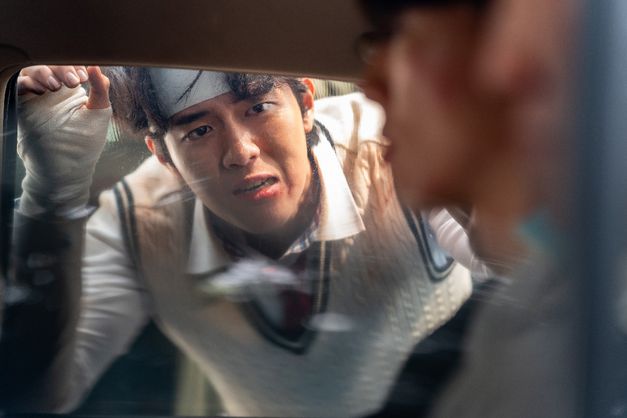
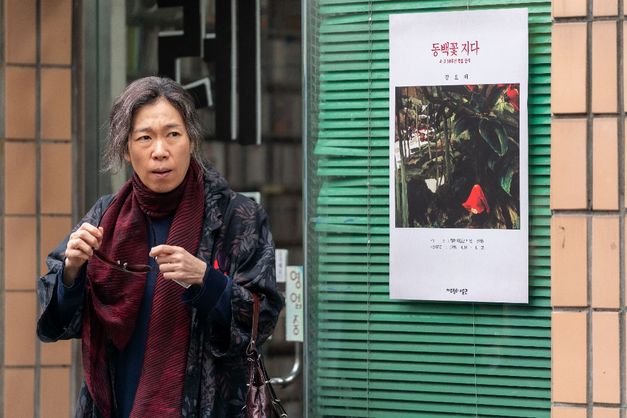
South Korea, 1998: While the country moves closer towards democracy, Young-oak remains at odds with his female-connotated name while attending a boy’s school where the air is thick with testosterone. The young man is struggling to fit in and find a new name among corrupt teachers and the teenagers’ violent power games, which are as subtle as they are extreme. Behind his mother Jeong-sun’s seemingly unflappable exterior, a past long repressed is reemerging, which she is reluctant to face. Yet confrontation is unavoidable – and it leads back to the national tragedy surrounding the Jeju Uprising of April 3rd, 1948. With suspense effects and a form of reenactment which distorts the meaning of the images, South Korea’s leftwing directorial icon Chung Ji-young channels the violent state of his country (past and present) into an identity drama. At different points in life, mother and son are both looking for their place within a society of taboos and fixed roles. Traumas come to the surface, the silenced and the repressed. At the end is the documentary image of a monument – as a sign of political topicality. (Fabian Tietke)
Chung Ji-young is a key figure of 1990s Korean cinema, recognised for his socially grounded films and influential role in industry activism. He established his reputation with North Korean Partisan in South Korea (1990) and White Badge (1992), while leading movements such as the resistance to Hollywood direct distribution and the safeguarding of the screen quota system. His later works sharpened his examination of institutional power. Since the 2010s, Chung has focused on the dignity of individuals confronting entrenched networks of wealth and authority outside formal democracy.
Director Chung Ji-young. Screenplay Kim Sung-hyun, Kim Hyun-woo, Chung Ji-young. Cinematography Kim Hyung-koo. Editing Lee Kang-il. Music Shin Min. Sound Design Kim Suk-won. Production Design Lee Kang-il. Costumes Kim Ha-kyoung. Make-Up Kim Hyun-jung. Producers Kim Soon-ho, Jeong Sang-min, Yi Jong-ho, Kim Yeong-hwan, Park Sun-hwoo. Executive Producer Kim Hye-jun. Co-Producer Jung Sung-jin. Production companies Let's Films (Seoul, South Korea), Aura Pictures (Goyang, South Korea). With Yeom Hye-ran, Shin Woo-bin, Choi Jun-woo, Park Ji-bin, Kim Gyu-ri.
World sales M-Line Distribution
Films: 1982: Angaeneun yeojacheoleom sogsaginda / Mist Whispers like Women. 1984: Chueogeui bitt / The Light of Recollection. 1987: Geolieui agsa / A Street Musician, Uigiui yeoja / A Woman on the Verge. 1988: Sanbaeam / Mountain Snake, Yeojaga sumneun sup / A Forest Where a Woman Breathes. 1990: Nambugun / North Korean Partisan in South Korea. 1991: Sansani buseojin ilemiyeo / Beyond the Mountain. 1992: Hayan chonjaeng a.k.a. Hayanjeonjaeng / White Badge. 1994: Hollywood Kid Eu Saeng-ae / Life and Death of the Hollywood Kid. 1996: Maegjuga ae-inboda Joh-en 7gaji i-yu / 7 Reasons Why Beer is Better Than a Lover (co-directed by Jang Gil-su, Jang Hyeon-su, Jong-won Park, Kang Woo-suk, Kim Yoo-jin, Park Cheol-su). 1997: Blackjack. 1998: Ga a.k.a Kka / Naked Being. 2011: Ma-seu-teo-keul-lae-seu-ui san-chaek / A Journey with Korean Directors (co-directed by Lee Doo-yong, Lee Jang-ho, Park Cheol-su), Yong-hwa-pan / Ari Ari the Korean Cinema (co-directed by Heo Chul), Bu-reo-jin hwa-sal / Unbowed. 2012: Namyeong-dong 1985 / National Security. 2019: Black Money. 2022: So-neyon-deul / The Boys. 2026: My Name.
Funded by: