Fever Dreams – Films of Nicolas Roeg

“To me, Roeg’s films are the only ones in the world that roll towards you like molten magma down the slope of a volcano. So dangerous, so hot, so fascinatingly beautiful at times, so unsettling in their different aesthetics, so free; as seductive as they are violent.” (Dominik Graf)
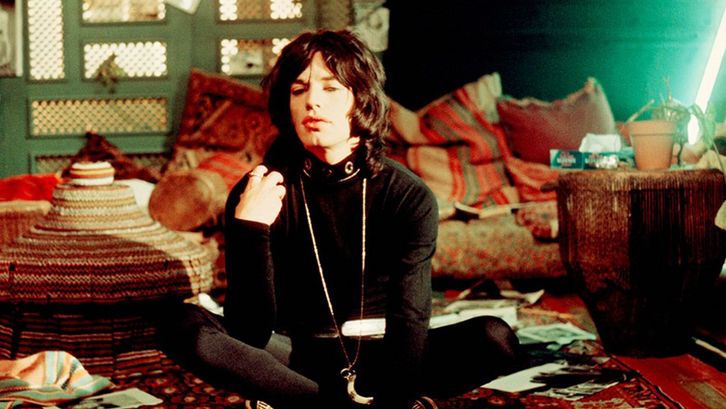
Nicolas Roeg (1928–2018) began his career working at various British film studios, where he gradually moved up through the ranks to become a cinematographer and was responsible for shooting several iconic films of the 1960s (including Petulia and Fahrenheit 451). Made in 1968 in collaboration with Donald Cammell, his directorial debut PERFORMANCE made a huge impact on the film industry. Horrified by the film, the studio held it back for two years; upon its release it was attacked by the press.
Although the reception of Roeg’s early films which he made in the 1960s and 1970s was often marked by a lack of understanding, they have long since been canonized and are continually subjected to a wide range of interpretations. His later films, which are less sophisticated in form and narrated in a more conventional manner, failed to receive the same degree of attention. Yet Roeg’s themes remained much the same: the existential alienation of modern society, obsessions of various kinds, the impossibility of forming fulfilling relationships. Above all, however, his films are characterized by complex montage
sequences in which spatial and temporal order is suspended and reassembled. His fragmentary narratives rarely follow a linear plot, circling around themes instead while abrupt changes of location and leaps in time trigger associations. His films are rich in significant details and allusions, the meaning of which sometimes only becomes apparent upon repeated viewings. Although firmly rooted in mainstream genres, his films’ experimental style offer a radical challenge to them. In his works, literally anything is possible. They explore not so much reality as realms of possibility and pipe dreams, and are often as unsettling as their protagonists in so doing, who are constantly searching for some sort of foothold. (Annette Lingg)
Funded by: