On August 25, Vaginal Davis dedicates her monthly film series to a jazz superstar: the documentary Thelonious Monk: Straight, No Chaser (USA 1988) was completed by Charlotte Zwerin six years after the death of legendary jazz pianist Thelonious Monk. The basis for the film is formed by footage shot in 1967 for German television and which was long thought lost. It shows Monk on tour, on stage, interacting with other musicians and above all gives some rare insights into his private life. With the help of the musician's friends and associates, Zwerin is able to create a piercing portrait of musical genius Thelonious Monk. Followed by drinks and music as always.
"Art / Violence"
An artist is shot: peace activist, director and actor Juliano Mer-Khamis died in front in his theatre in the Jenin refugee camp in 2011. His murder has yet to be solved to this day. Mer-Khamis, son of a Jewish mother and a Palestinian father, had been head of the Freedom Theatre since 2006, using art as a means of challenging hopelessness and violence in the refugee camp. He also saw the theatre as representing an opportunity to offer artists a stage regardless of their nationality and sex. The film ART / VIOLENCE documents the period following Juliano Mer-Khamis’ murder: how should his legacy be established, how should the feelings of impotence, grief and anger be dealt with and how should the theatre continue its work? The film employs a mix of interviews, scenes from the theatre, footage of a hip-hop concert, images from the past and animated sequences to document theatre projects old and new as well as the difficulties and challenges encountered by the young actors in their work. ART / VIOLENCE is split up into three chapters, each relating to one of the Freedom Theatre’s projects: Alice in Wonderland, Waiting for Godot and Antigone.
Arsenal Summer School
In Cinemas: "Kid-Thing"
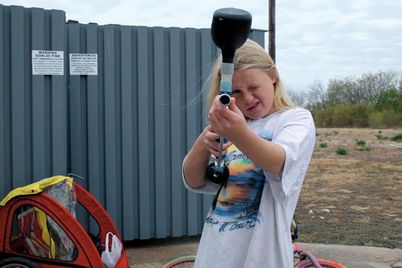
KID-THING from last year's Forum program can be seen in selected cinemas from August 22. David Zellner's film tells of 10-year-old Annie, who roams alone through forest and meadow, leaving a trail of destruction in her path, as school's been out for days already and there's no-one to look after her. But her confidence is severely shaken when she comes across a hole in the ground from whose depths a woman’s voice can be heard calling for help. As if guided by some magic power, she returns again and again to this place of mystery, first with sandwiches and walkie-talkies and later with a request. Although she’s a proper little brat, the film takes an empathetic look at lonely rebel Annie. She may bellow defiantly "I'm not scared of nothing!! into the hole but is frightened nonetheless, full of questions which no adult seems able to answer. The land that the Zellner brothers present us here is a run-down realm of the debilitated and the disturbed, their combination of hyperreal independent film motifs and fairy tale tropes generating something genuinely unique: disturbing, funny, brutal, offbeat and melancholy.
DAAD Fellow Sandro Aguilar
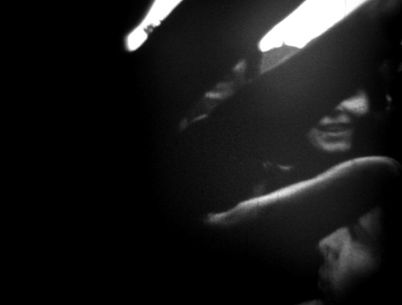
Portuguese filmmaker Sandro Aguilar (*1974) is currently the guest of the DAAD's Berlin Artists' Program. His mainly short films lead the viewer into a mysterious, dark universe. They are idiosyncratically narrated micro-fictions characterized by carefully composed shots, virtuoso work with light and dark, blurred images and reflections and elaborate sound design. Almost wordlessly and extending beyond any sort of narrative logic, a dreamlike, mysterious and often disturbing atmosphere is created purely via the films' visual and acoustic elements. The characters are surrounded by emptiness and solitude – as too in Aguilar's feature A ZONA (Uprise, 2008), in which a man visiting his dying father in hospital meets a panicky pregnant woman who survived the car accident in which her husband died. (29. & 30.8.)
Living Archive: El golpe
"Al-khoroug lel-nahar – Coming Forth by Day"
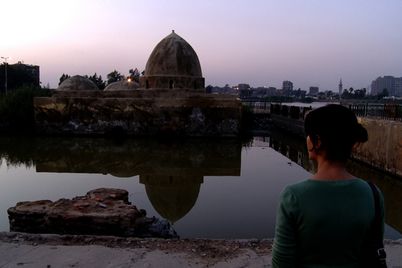
One day in the life of Soad, who lives with her mother and bed-ridden father on the outskirts of Cairo. While bright sunlight and the sounds of the city can be made out behind the half-closed shutters, everything in the flat exudes the smell of old age, sickness and stagnation. Her mother works nights in a hospital and has barely any energy to spare during the day. Soad too is no longer young, having resigned herself to caring for her incapacitated father and putting her own life on hold. The camera patiently follows her movements and daily activities that have become routine, capturing her frustration as well as moments of great tenderness. Hala Lotfy’s impressive debut focuses on the relationship between light and shadow, within and without, life and death. Coming Forth by Day, the idea of emerging into light, is the literal translation of the title of the ancient Egyptian Book of the Dead. Soad’s longing is palpably directed outside. But when she leaves the flat in the evening and wanders alone through Cairo by night, it becomes clear just how far she has already distanced herself from her own needs. And yet at the end of the night begins a new day that may still bring change.
Funded by:
Arsenal on Location is funded by the Capital Cultural Fund
The international programs of Arsenal on Location are a cooperation with the Goethe-Institut